Description:
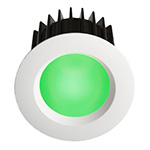
The dimmable RGBW LED recessed spotlight is the ideal 24V LED spotlight when both high luminous flux and colored accent lighting are required. The high color rendering index (typ. 93) ensures natural, pleasant light, and with the variety of colors available, you can conjure up unique lighting moods
Here you will find the 10 best tips for LED spotlights, free tools, tutorials, our lighting blog, and many other services from Emilum. We support you with advice and assistance for your construction project as if it were our own!
Areas of application:
The recessed spotlight with color change creates beautiful color accents in your smart home. The special look with reflector and diffuser produces a wonderful light pattern and rounds off the concept.
The RGBW recessed spotlight is therefore ideal for all rooms where dynamic, colorful lighting is desired. Of course, the RGBW recessed spotlight is suitable for damp locations and can therefore also transform your bathroom into a wellness oasis.
Technical features:
The LED recessed spotlight (RGBW & dimmable) has been specially developed for areas where high luminance and color accents are required, with impressive efficiency of 110lm/W and approx. 1100 lumens at a typical CRI of 93.
Installation:
The RGBW recessed spotlight is simply connected to the 4-channel dimmer using connection terminals and mounted in the ceiling outlet. The spotlight springs ensure a stable hold and easy installation. The spotlight is an LED recessed light with a mounting depth of 70 mm. If cables are accidentally connected incorrectly to the spotlight, the internal reverse polarity protection prevents damage and the constant current control ensures that even the last spotlight in the chain has the same brightness as the first!
Control of the spotlights:
Control is via a 4-channel PWM dimmer. Our dimmer with item number E10072 is perfect for controlling up to 7 spots on a single dimmer!
Other variants in the product family:
In the 10W LED recessed spotlight family, we also offer the same version as a tunable white recessed spotlight and a warm white LED recessed spotlight.
In addition to the 10W family, our shop also offers numerous other RGBW spotlights in a wide variety of designs.

Eulumdaten