Description:
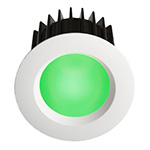
The 3000K LED surface-mounted spot impresses with its modern design and high luminosity. In contrast to classic recessed spots, these 24V LED spots are mounted on the surface or installed as stylish furniture luminaires.
What should you look out for when deciding which spots to buy? We offer you simple but well-founded tips for choosing spots, specific application examples, best-practice solutions, and much more.
Technical features:
The 24V LED surface-mounted spotlight can be swiveled and is available in different designs made of high-quality aluminum. Particular emphasis was placed on a high color rendering index (value for color accuracy: CRI typ. 93) and excellent efficiency (light yield: 111 lm/W). Reverse polarity protection ensures maximum safety by protecting the spotlight from damage even in the event of incorrect wiring. The constant current control of the LEDs also ensures a consistent lumen output, regardless of fluctuations in the power supply or voltage drops on the line.
Areas of application:
The LED surface-mounted spotlight exudes exclusive charm and can be used in particular where recessed spots are no longer possible for construction reasons. Thanks to the modern design language of the LED luminaire, it can also be used as a striking design element in your interior design.
Installation:
The spotlight is designed as a surface-mounted spotlight, which means that it can be retrofitted to ceilings or furniture at any time. First, the mounting disk is attached, then the two connections f are connected and finally the lamp body is screwed on. True to the company motto: safe, simple, smart!
Control:
the surface-mounted spotlight is just as easy to dim as it is to install. A PWM channel of a 24V PWM dimmer is required for the 24V LED surface-mounted spotlight. This allows the brightness to be adjusted continuously.
Here you will find the 10 best tips for LED spots, free tools, tutorials, our lighting blog and many other Emilum services. We support you with advice and assistance in your construction project as if it were our own!
Further variants:
Would you like to adapt your lighting to different moods and occasions? Our 24V LED spots offer you maximum flexibility – from clear basic lighting to vibrant color accents. Since both the fronts and the housing are identical, you can even mixdifferent technologies within a single roomand still have a uniform ceiling design!
Alternative models:
This exclusive surface-mounted luminaire is also available as an RGBW surface-mounted spotlight and as a Tunable White surface-mounted spotlight in our extensive range.
If you need recessed versions in addition to the surface-mounted spotlights, you will find them in the category of 24V LED recessed spotlights.

eulum data