Description:
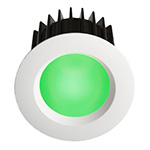
With an installation depth of just 30mm, this RGBW spotlight is extremely flat and impresses with its numerous features and versatile applications! The 24V LED spots in this series are available in a wide range of technologies, can be tilted and the fronts can be exchanged (even retrospectively!). Excellent light data such as high efficiency and color rendering are a matter of course.
Here you will find the 10 best tips for LED spots, free tools, tutorials, our lighting blog and many other Emilum services. We support you with advice and assistance in your construction project as if it were our own!
Areas of application:
The 24V RGBW spotlight is as individual as your interior design and is therefore suitable for all rooms in your home. The five different fronts can also be combined as you like (e.g. Inner ring in gold, outer ring in black) and can also be adapted if the interior design has changed.
The RGBW LED spotlight was specially designed for use in confined spaces, such as in prefabricated houses.
Technical features:
The spotlight is flat and can also be swiveled. Particular emphasis was placed on a high color rendering index (color accuracy value: CRI typ. 94) and excellent efficiency (light yield: 111 lm/W).
Installation:
The RGBW spotlight is simply connected to the 4-channel dimmer using connection terminals and mounted in the ceiling outlet. The spotlight springs ensure a stable hold and at the same time easy installation. The spot is an LED recessed luminaire with an installation depth of only 30mm. If cables are accidentally connected incorrectly to the spot, the internal polarity protection protects it from being destroyed and the constant current control ensures that even the last spot in the chain has the same brightness as the first!
Controlling the spots:
The control is done by a PWM dimmer. This way, up to 15 of these spots can be operated with our dimmer with the item number E10072!
Other variants in the product family:
Other members of this unique swing spot series are: RGBW spot with 3000K, tuneable white, DimToWarm spot, 2700K spot and 3000K spot.
For those who want even more light and have a little more space available, our 10W RGBW spot with 70mm installation depth is suitable.

Eulumdaten