Description:
The Dim2Warm spot light source makes your living situation even more comfortable and pleasant. By the way, Dim-To-Warm, Warm-Glow and Glow Dim are different designations, but describe the same technology:
1. The dim-to-warm spot can be operated like a conventional LED spot with a channel of a 24V PWM dimmer.
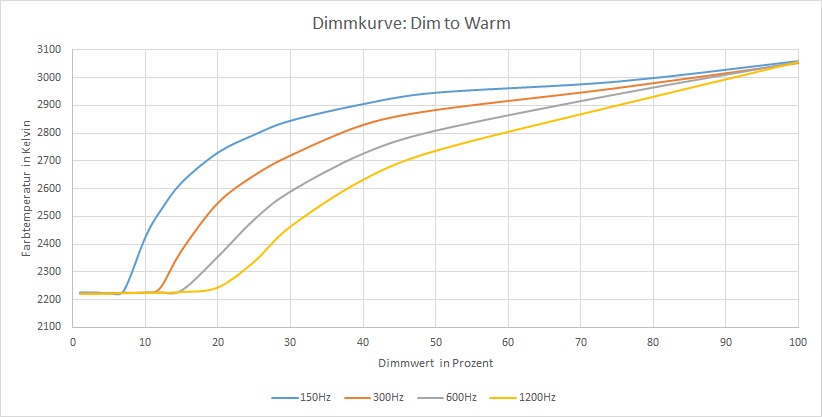
2. When dimming, the color temperature also changes. The further dimmed , the warmer the light. This is the so-called warm glow effect.
Humans are deeply connected to natural sunlight, which controls our well-being and our biological clock. Warm white light promotes relaxation and creates a pleasant atmosphere. This light color supports a healthy sleep-wake rhythm and increases our sense of well-being indoors.
What should you look out for when buying spots? We offer you simple but well-founded tips for choosing spots, specific application examples, best-practice solutions, and much more.
Areas of application:
If you don't have a second dimming channel for tuneable white available, but still don't want to do without the color temperature setting, then the Glow Dim Spot is just right for you! The color temperature curves are already stored, so no additional programming is required. The Warm Glow Spot is therefore ideally suited for rooms that create an additional warm lighting mood when the light level is dimmed (living room, bathroom, kitchen, children's room).
Technical features:
The color temperature curve can even be varied using the PWM dimmer frequency. Simply adjust the frequency to your preferred light curve!
Thanks to the reverse polarity protection, the spot cannot be destroyed even if the wiring is faulty. The constant current control of the LEDs guarantees the same lumen output even with a lower or higher power supply.
Installation:
TheDim2warm spot is easily connected via connecting terminals for the two supply lines. Installation is efficient and reliable thanks to the two robust springs that securely hold the spotlight in a 68 mm mounting cutout. With an installation depth of just 30 mm, the 24V LED recessed spotlight is particularly suitable for use in suspended ceilings.
Control and dimming:
The control is done with a conventional PWM dimmer. Our dimmer with the article number E10001 or E10072 is perfect for controlling up to 60 Dim-To-Warm spots with a single dimmer!
Variations of the warm white LED spotlight:
This spot is one of many in our LED24V LED spot range.
For those who want to control the color temperature and dimming independently, our CCT LED spot is the perfect alternative.

Eulumdaten